El Paso Water Hardness, Source by Source and Season by Season
El Paso water hardness has no single answer because the city's water has no single source. Here is what each source brings, according to the utility's own figures.
El Paso Water blends the Rio Grande with Mesilla Bolson and Hueco Bolson groundwater. Its posted analysis lists hardness from 63 mg/L (desalination plant supply) to 236 mg/L (Lower Valley wells), averaging about 175 mg/L, or 10.2 grains per gallon. River water flows from March to September.
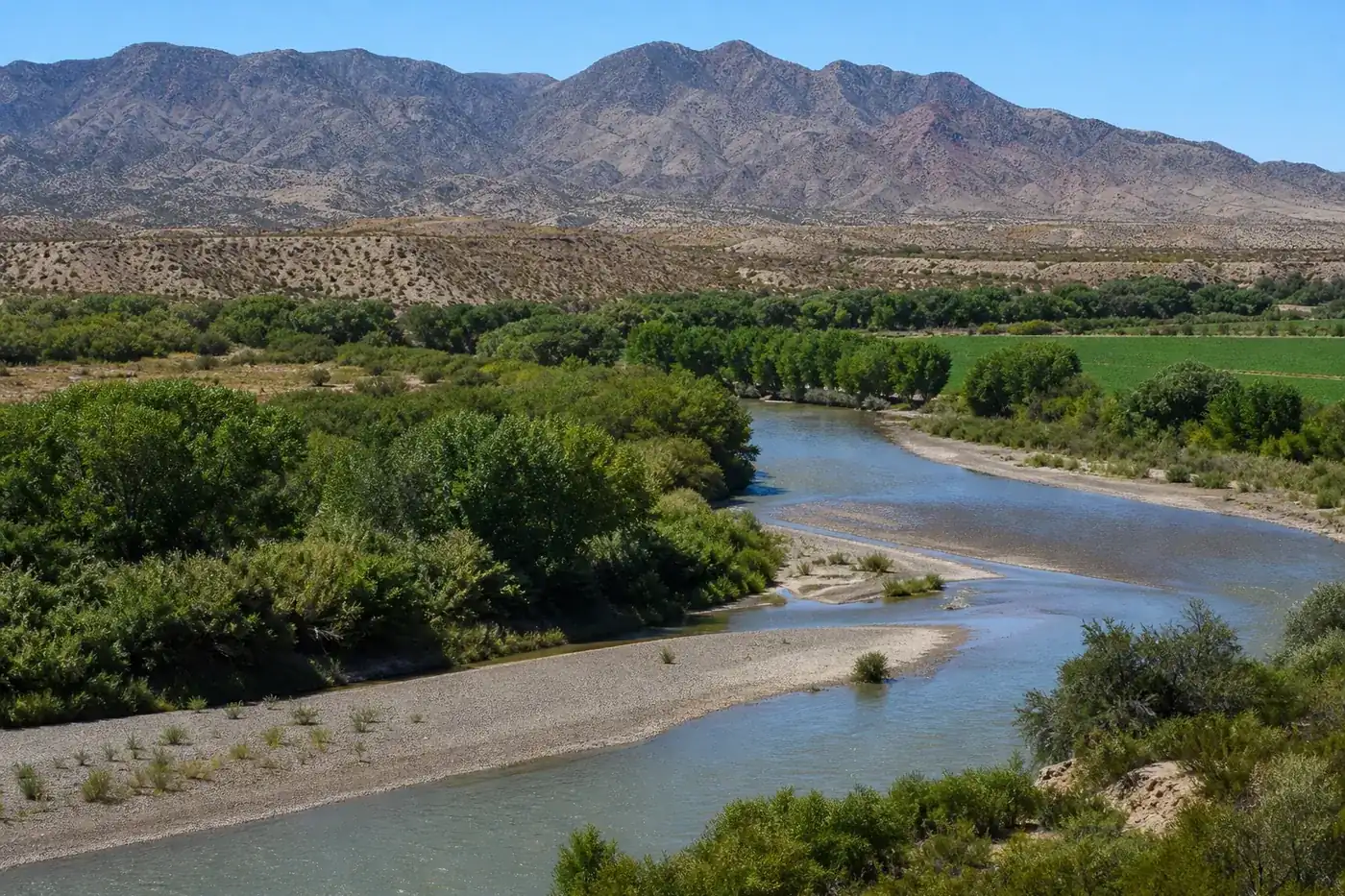
The three sources
The 2025 Drinking Water Report names one surface source, the Rio Grande, and two groundwater sources, the Mesilla Bolson and Hueco Bolson aquifers, and says most customers receive water from two sources depending on the time of year. River water is treated at the Jonathan Rogers plant and at the Robertson and Umbenhauer canal plants. The report adds that no lead service lines were found in the system's inventory of more than 100,000 meters, and 192 galvanized lines were flagged for replacement.
Hardness and salts by source
- Upper Valley wells (year-round): hardness 119 mg/L, dissolved solids 630, sodium 168.
- Rio Grande at Robertson and Umbenhauer (March to September): hardness 235, dissolved solids 650, sodium 130.
- Northeast wells (October to February): hardness 149, dissolved solids 470.
- Airport wells (October to February): hardness 168, dissolved solids 627.
- Fort Bliss and Airport wells to the desalination plant (year-round): hardness 63, dissolved solids 454.
- Rio Grande at Jonathan Rogers (March to September): hardness 230, dissolved solids 700.
- Lower Valley and Central wells (October to February): hardness 236, dissolved solids 862, sodium 217.
All figures are El Paso Water's averages in mg/L from its posted chemical analysis. Divide hardness by 17.1 for grains per gallon.
What desalination changes
The Kay Bailey Hutchison plant, built with Fort Bliss, takes brackish Hueco Bolson water from sixteen production wells and sixteen blend wells, strains and filters it, and runs it through five reverse osmosis trains; it can produce up to 27.5 million gallons a day, per El Paso Water. The utility's analysis lists this source as the softest in the system, and places it in the usual mix for the Northeast, East and Far East.
Using these numbers at home
The utility notes that its sources are interconnected and the mix changes, so treat the list as a guide and test your own tap. Size a softener for the hardest season your area sees; see seasonal sizing. For the salty taste, which no softener removes, read reverse osmosis for El Paso water.
What does your water leave behind?
Tell us briefly: white crust, a salty or flat taste, an RO faucet that slowed down, or a softener that stopped keeping up in summer. One independent water treatment specialist who works in El Paso will get in touch.